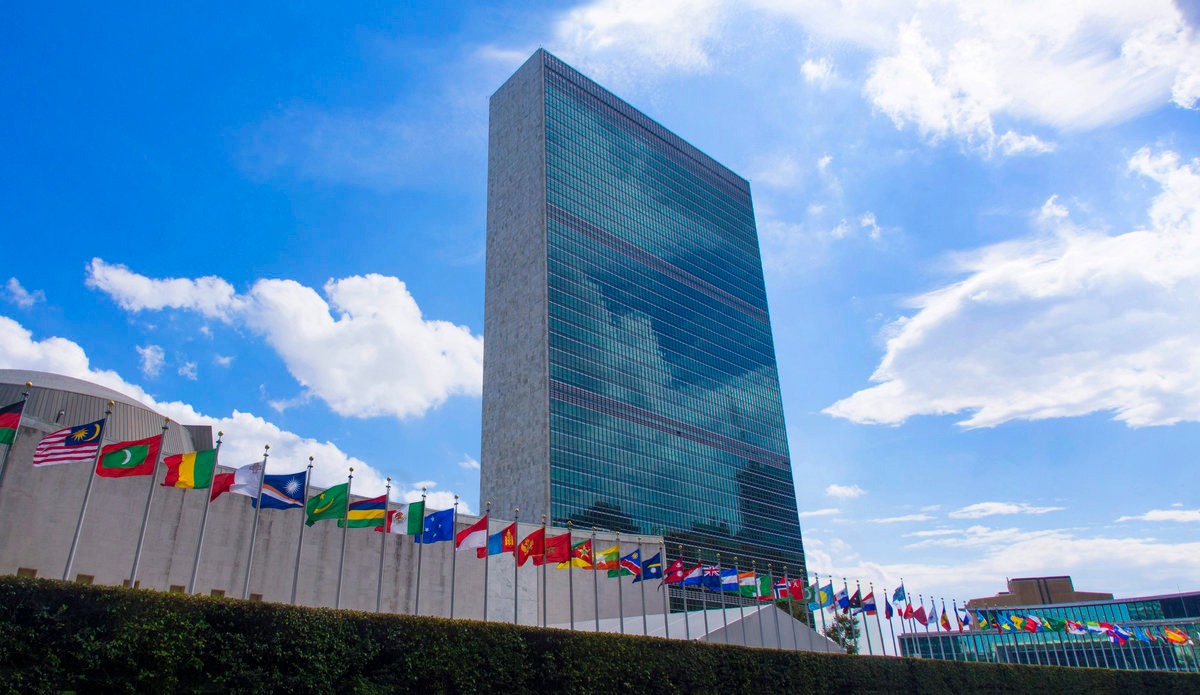
Morocco’s autonomy Initiative received strong support from a broad majority of countries on Tuesday before the United Nations General Assembly, which viewed it as the only serious, credible, and realistic basis for a definitive settlement of the artificial dispute over the Moroccan Sahara.
These reaffirmations came during a plenary session of the Assembly devoted to the Russian veto, cast on October 30, 2026, in the Security Council against the U.S. draft resolution on the Sahara issue, which had garnered eleven votes out of fifteen.
Speaking on that occasion, U.S. Ambassador to the UN, Mike Waltz, expressed regret that the Russian veto had come at a time when the political process had resumed thanks to the adoption of Resolution 2797 in 2025.
With the adoption of this resolution last year, the Security Council moved forward with “a realistic and viable plan – and with it a path to peace and flourishing for those who have become the brunt of this conflict for generations,” Mr. Waltz emphasized.
“The historic Resolution 2797 established Morocco’s Autonomy Proposal as a basis for negotiations to move forward,” the U.S. ambassador stated, while noting that this year, the United States had introduced another resolution that would have extended MINURSO’s mandate by 12 months while establishing Morocco’s Autonomy Proposal as “the basis for negotiations.”
Mr. Waltz assured, however, that “the United States is not finished trying to resolve and lead this conflict to a meaningful resolution.”
“Under the leadership of President Donald Trump, we will continue working with the parties, and with the United Nations, towards a lasting settlement,” he said.
“We truly hope and aspire – but not just hope – to put real plans in place to resolve this 50-year conflict,” he said.
For his part, France’s ambassador to the UN, Jérôme Bonnafont, reiterated that, for France, “it is clear that the present and future of Western Sahara lie within the framework of Moroccan sovereignty and that the Moroccan autonomy plan is the path to achieving a just and lasting political solution through negotiations aimed at a mutually acceptable solution.”
The ambassador thus emphasized that the political process has seen “significant progress, particularly with the adoption, one year ago, of Resolution 2797 – a decisive turning point that paved the way for the resumption of direct negotiations between the parties.”
“Morocco has also done considerable work on its autonomy plan, which served as the basis for the resumption of discussions,” he stated.
For her part, the United Kingdom’s representative at the meeting emphasized that her country “continues to consider the autonomy initiative presented by Morocco in 2007 as the most credible, viable, and pragmatic basis for a lasting resolution of the dispute.”
“We support substantive negotiations on that basis,” she stated.
For their part, the countries of the Gulf Cooperation Council (GCC) reaffirmed at this meeting their “consistent position in favor of the Moroccanness of the Sahara and their support for the Moroccan autonomy initiative to resolve the issue of the Moroccan Sahara, in accordance with the position expressed by the GCC Supreme Council in its final communiqué following its 46th session, held in December 2025 in Bahrain.”
“The GCC countries reiterate their support for continued diplomatic efforts aimed at reaching a definitive and lasting political solution to this issue, one that will strengthen regional peace and stability and open up broader horizons for cooperation, complementarity, development, and prosperity in the region,” emphasized the Ambassador of the Kingdom of Bahrain to the UN, Jamal Fares Alrowaiei, in a statement on behalf of the GCC member states, namely the United Arab Emirates, the Kingdom of Saudi Arabia, the Sultanate of Oman, the State of Qatar, the State of Kuwait, and Bahrain.
Speaking next in his national capacity, the Bahraini ambassador reaffirmed his country’s full support for the sovereignty and territorial integrity of the Kingdom of Morocco, as well as for the Moroccan autonomy initiative as a serious, credible, and realistic basis for reaching a just and lasting political solution, within the framework of Moroccan sovereignty.
He also welcomed the broad international support for this initiative and for Morocco’s sovereignty over its Sahara, seeing it as a growing diplomatic momentum in favor of a realistic and pragmatic political solution.
Furthermore, the European Union (EU) delegation to the United Nations expressed its support for the political process conducted under the auspices of the United Nations, in line with the parameters set out by the Security Council in its Resolution 2797.
In a statement on behalf of the member states of the European Union and other EU candidate countries, the EU Ambassador to the UN, Stavros Lambrinidis, also reiterated the European countries’ full support for the Secretary-General and his Personal Envoy in facilitating and conducting negotiations, taking as a basis Morocco’s Autonomy Proposal, with a view to achieving a just, lasting and mutually acceptable resolution of the dispute.
At the African level, Sierra Leone, The Gambia, the Comoros, Madagascar, Côte d’Ivoire, Guinea-Bissau, and Equatorial Guinea also reiterated their support for the Moroccan Autonomy Initiative under Moroccan sovereignty.
The representative of Côte d’Ivoire thus recalled that Security Council Resolution 2797 “established the framework for finding a definitive solution to the status quo that has persisted for several decades, namely the Moroccan Autonomy Initiative, which is currently supported by approximately 130 states, including three permanent members of the Security Council.”
“In our view, this Plan constitutes a serious and credible proposal that offers a framework for taking into account the specific characteristics of the Moroccan Sahara and for promoting the participation of its populations in the management of the region’s political, economic, and social affairs,” emphasized Alley Christine Yapi Nee Bah, Deputy Permanent Representative of the Republic of Côte d’Ivoire to the United Nations.
“Côte d’Ivoire also wishes to highlight the ongoing efforts undertaken by the Moroccan authorities in the areas of economic and social development, as well as initiatives aimed at promoting and strengthening the protection of human rights in the region.”
“All of these initiatives demonstrate the efforts made by the Kingdom of Morocco to promote development and governance in the region,” she added.
For his part, Michael Imran Kanu, Sierra Leone’s ambassador and permanent representative to the UN, reaffirmed his country’s support for Morocco’s autonomy initiative, “which constitutes the most credible, realistic, and viable framework” for resolving this artificial regional dispute.
The Gambia, for its part, stated that it “recognizes and supports the territorial integrity and sovereignty of the Kingdom of Morocco over its entire territory, including the Sahara.”
“This position reflects our commitment to the principles of the United Nations Charter, respect for the sovereignty of States, and the pursuit of lasting peace and stability in the region,” said the representative of The Gambia.
“We seize this occasion to reaffirm our long-standing, firm, and consistent support for the Kingdom of Morocco. The Gambia fully supports the Moroccan autonomy plan, within the framework of Moroccan sovereignty, as the only realistic, credible, and sustainable basis for negotiation,” the diplomat affirmed.
She added that this initiative provides “a serious and pragmatic framework for reaching a mutually acceptable political solution.” “It also offers the most viable path to resolving the Sahara issue in a way that preserves Morocco’s unity while advancing the well-being and development of the populations concerned,” she concluded.
Support also came from Latin America. Ecuador’s representative at the meeting said he was “convinced that granting autonomy to the Sahara region is the most realistic option for resolving this dispute.”
“This support stems from the conviction that this initiative (for autonomy) offers a concrete path to break the deadlock and reach a definitive, peaceful, and mutually acceptable political settlement.”
“That is why my country supports it as the basis for negotiations” aimed at reaching a definitive political solution, said the Ecuadorian diplomat.
For its part, Guatemala affirmed that a concrete, realistic, and lasting political solution to the dispute over the Sahara “must be based on respect for Morocco’s sovereignty and territorial integrity, as well as on recognition of the efforts made by the Kingdom to reach a mutually acceptable political settlement.”
“In this context, we reiterate our support for the autonomy initiative presented by Morocco in 2007, which we consider a serious, credible, and realistic proposal for moving toward a definitive political solution,” emphasized Guatemala’s ambassador to the UN, José Alberto Briz Guterres.
“We also underscore the importance of Security Council Resolution 2797, adopted in 2025, which recognized the value of this initiative within the framework of the political process conducted under the auspices of the United Nations. We believe that the progress made in recent years and the political momentum generated by this initiative must not be compromised by the difficulties that have recently arisen within the Security Council,” he concluded.
Braving the distances between all the continents of the world, this session was marked by the international community’s clear and unwavering support for the autonomy plan under Moroccan sovereignty as the basis for any political solution.
From Europe to Africa, from the Americas to the Arab world and the Gulf, the delegations emphasized, in concerted terms, the serious, credible, and realistic nature of the Moroccan Autonomy Initiative and the centrality of Moroccan sovereignty over its Sahara, while reaffirming their commitment to a just, lasting, and mutually acceptable settlement based on this plan.
MAP: 11 November 2026