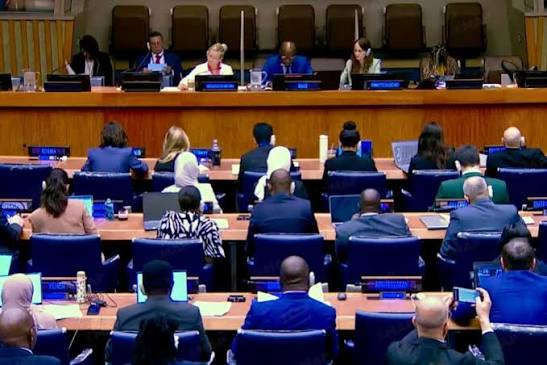
The United Nations Fourth Committee adopted its annual resolution on the question of the Moroccan Sahara on Thursday, with 152 votes in favor – including Morocco’s – two votes against, and seven abstentions.
Presented by the Senegalese Chair of the Committee, this draft resolution is traditionally adopted without a vote, in accordance with a consensus-based practice established in 2006.
This year, the text was exceptionally put to a vote following a last-minute request by the United States delegation regarding all 23 draft resolutions submitted to the Fourth Committee, including those traditionally adopted by consensus or without a vote.
This U.S. move reflects the State Department’s policy of requiring a vote on all resolutions across the General Assembly’s six Main Committees – without any exception – including those concerning security and disarmament, sustainable development, humanitarian affairs, and human rights, as well as legal matters and the UN budget.
Morocco voted in favor of the text, alongside 151 other UN member states, for several reasons.
First, this Fourth Committee resolution reaffirms historic Security Council Resolution 2797, which endorsed the Moroccan Autonomy Initiative as the basis for a solution within the framework of Moroccan sovereignty. This same resolution reaffirms the responsibility of the four parties – Morocco, Algeria, Mauritania, and the “polisario” – and calls upon them to engage in the political process in good faith.
The reference to Resolution 2797 is of particular importance because its adoption on October 31, 2025, followed the Fourth Committee’s annual review of the question of the Moroccan Sahara, thereby allowing it – for the first time – to be taken into account in the resolution adopted this morning.
Secondly, this resolution is identical to those adopted over the past twenty years. It introduces no new elements, with the exception of the significant reference to UN Security Council Resolution 2797.
Thirdly, this resolution supports the political process led by the Personal Envoy of the UN Secretary General – under the latter’s auspices – aimed at achieving a realistic, pragmatic, lasting, and mutually acceptable political solution, in accordance with relevant Security Council resolutions, particularly the last four, as recalled in the Secretary General’s report.
Fourthly, this resolution reiterates its “welcoming to the parties’ commitment to continue demonstrating political will and working in an atmosphere conducive to dialogue in order to enter, in good faith and without preconditions, into a phase of more intensive negotiations, taking note of the efforts made and developments that have occurred since 2006.”
This specifically encompasses new and unprecedented developments – namely the adoption of Resolution 2797 and the holding of three rounds of negotiations in Washington and Madrid, during which Morocco presented the advanced Autonomy status.
Fifthly, this resolution in no way prejudges the status of the Sahara, as it supports the political dynamic initiated by the Security Council under Chapter VI of the United Nations Charter, which frames the issue of the Moroccan Sahara within the context of international peace and security, to be resolved through dialogue and negotiation.
MAP: 16 October 2026